Monday, August 12, 2013

The Bridge, Layering Information and Redefining Literacy

The Bridge is a new FX TV show that I picked up on demand recently. The topic of a thriller around the border crossing between the US and Mexico seemed like an intriguing opportunity to examine how pop culture is viewing the issues.

While I found the series thoroughly enjoyable I was even more intrigued by their effort to integrate media. The website for the show includes everything in both English and Spanish just like the show itself alternates between English and Spanish as appropriate for a scene.

In addition the series created a free iBook that provides additional textual and photographic layer. I think that this aspect of the show is very interesting for educators trying to create content that is interesting, integrated, and meaningful. The way I think about it is purposeful layering of information in different information without guiding the conclusion. For example the series shows many facets of immigration and the people who are impacted by it but it does not come at it from an obvious pro or con stance. The book just thickens that layer and allows those who are interested to explore further.


In a way the show is a good example to how popular culture and the entertainment industry are seeing as the next step and I see as a redefining of literacy. Literacy is no longer primarily reading and wring on paper but instead a multimedia weave of forms and content- including visual, audio, video, word, and social. It is as interactive and social as we'd like to make it. The layering allows each person to choose an entry point and explore in different directions.

Tuesday, July 30, 2013

Games and learning- evidence

I am attaching empirical results about the impact of games on learning. This is where empirical evidence trumps "common sense" it is not motivation. Instead it is combining traditional and game based instruction, group work and multiple sessions. A good preview to Jim Gee's visit to UNL on Aug 20th and his talk on Gaming in Education.

A meta-analysis of the cognitive and motivational effects of serious games.
By Wouters, Pieter; van Nimwegen, Christof; van Oostendorp, Herre; van der Spek, Erik D.
Journal of Educational Psychology, Vol 105(2), May 2013, 249-265.
Abstract
It is assumed that serious games influences learning in 2 ways, by changing cognitive processes and by affecting motivation. However, until now research has shown little evidence for these assumptions. We used meta-analytic techniques to investigate whether serious games are more effective in terms of learning and more motivating than conventional instruction methods (learning: k = 77, N 5,547; motivation: k = 31, N 2,216). Consistent with our hypotheses, serious games were found to be more effective in terms of learning (d= 0.29, p < .01) and retention (d = 0.36, p < .01), but they were not more motivating (d = 0.26, p > .05) than conventional instruction methods. Additional moderator analyses on the learning effects revealed that learners in serious games learned more, relative to those taught with conventional instruction methods, when the game was supplemented with other instruction methods, when multiple training sessions were involved, and when players worked in groups. (PsycINFO Database Record (c) 2013 APA, all rights reserved)


Saturday, July 20, 2013

iPads in the classroom workshop

I have just finished an intense week working with educators on iPad integration into the classroom at UNL. We had participants from across the k-16 spectrum and with very different levels of experience. From first time users who unboxed their first iPads the morning of the workshop to a teacher that has already implemented iPads in her classroom effectively.

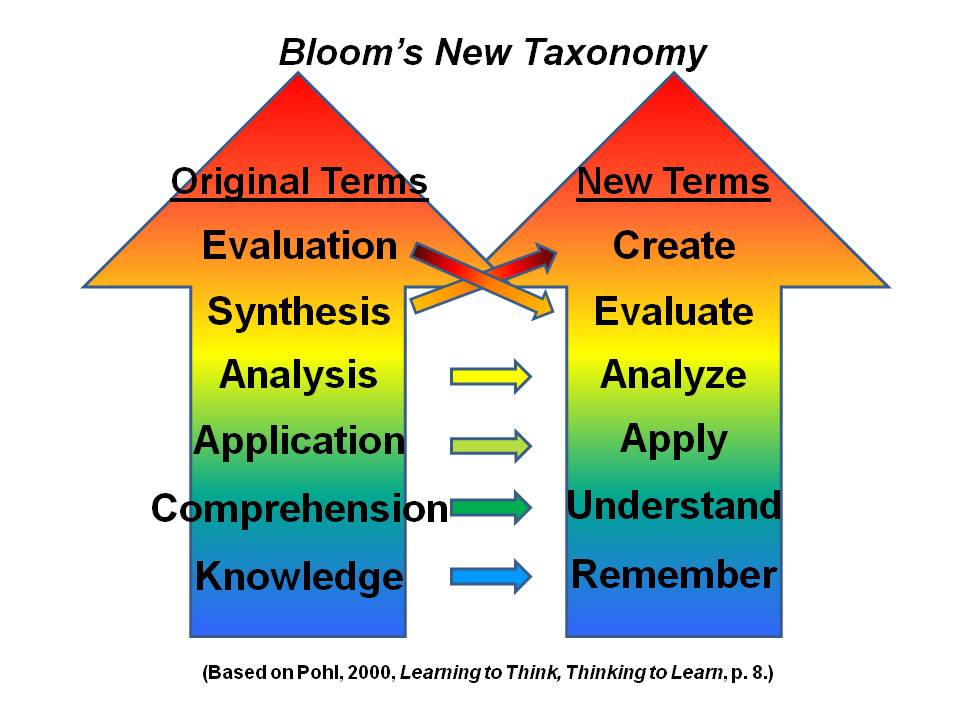
The approach was developmental and each of our learner-participants (students just sounds wrong) set their own personal goal. They all made it. Outcomes included creating iBooks on grammar, a blog on apps for teachers in the school, books that taught basic words in native languages and many many more. As everyone presented on Friday I could not stop smiling and thinking about this amazing group of learners and their willingness to step with us outside their comfort and embrace twitter, apps, and a new role for the teacher. We aimed straight for the creation and critical thinking (Blooms taxonomy) knowing that the rest was something we could all do.
One of our participants reflected on her blog: "My mind is reeling with ideas now. It is an exciting time for me as I feel we are on the cutting edge rather than just catching up with a movement."
Another:
I also like the idea of a flipped classroom.  It was nice that Jason was honest about the startup time and possible frustrations that we may run into while trying to implement this process.

The biggest lesson was mine. Yes, all teachers can learn to CREATE in a short amount of time and all of them created video, screen casts, and other media products. Yes, iPads seem to make sense for everyone in education in different ways although it is by no way a magic bullet. And, Yes, it was very stressful but also lots of fun. Looking forward to next year and using some of this year's participants as coaches. 
Now I am ready for a break...

Saturday, July 13, 2013

Netflix Binges and Education

I have recently joined the Netflix throngs. As its use spread throughout our devices  I observed my kids and I binging on a specific show. 
I started thinking about the value of "binging" in education. As a matter of fact I just finished teaching two summer classes that effectively were a binge phenomena. My perception that on some topics, especially ones that have a high level of novelty and cognitive load a concentrated effort like this is useful. 
The question I am left pondering is whether this can work in schools. The Accelere program in Omaha is one such approach helping high school students get credits in short bursts.


Sunday, June 30, 2013

Back at the Reading Center- iPads and pre service teachers


 I come back to Reading Center every summer with anticipation. It is a great place to try out new ideas and examine change in teachers and students over short periods of time. During the last few years integrating technology especially tablets (well really iPads) has been a focal point. Two years ago we experimented with iPads for instructors, coaches, and teachers working with struggling readers. The following summer we purchased a classroom set and integrated technology into every aspect of the course.

This summer technology, when it is useful, is ubiquitous- which ultimately is our goal. During the first day about a third of my students showed up with their own tablets. By mid course it was over a half. As students saw that tablet use is encouraged, almost required, they brought devices they already had. The rest are still using our class set.

I am not a big fan of a random BYOD. It creates more problems than solutions. As a program we moved into defining a requirement that will create enough uniformity allowing faculty and students to find a common path. At the same time I am finding that students are eager to bring their devices and use them to support instruction.

I love hearing comments like: "this is much better when I use my phone" or this works better without using the iPads. It means that teachers (and future teachers) are developing the capacity to use technology and make professional judgements about utility and cost benefit.

The impact can be seen through comment by one of our teachers last week:

Alan lights up whenever I pull out the iPad and always wants to know where I found a certain app, or how I created a game. Alan even goes home and adds the free apps to his iPad at home. I have liked using just the basic Safari browser for Google Images. Alan has a hard time picturing words he's never heard of, so we look up pictures of him. This week I used iCardSort, Safari, Dragon Dictation, iDictionary, and Track and Change. (Names were changed)

Change now is multi level. Teachers are coming with more willingness and more access to devices. They see the connection to devices already in the schools, and finally we can add to their knowledge and flexible implementation of technology integration.

Sunday, June 9, 2013

Classroom in Conditional Tense

Last Tuesday we had our summer Tech EDGE conference. It was a great day with excellent presentations, great conversation and participation. We have been playing with formats for a closing section. This time we tried out an "Imagine" session. A forum to ask questions and generate ideas for collaboration and collegial support between university, district, schools, and teachers.

I am still not this session was successful and I think our follow-up next year will tell. I would like to respond more thoughtfully to a question posed during the session. Mary, one of our cooperating teachers asked what classrooms of the future look like. I responded at the time with- I don't really know and by the time I do it will change again.

Later when I had time to reflect I came to understand her question differently: What should/could our classrooms look like now? Now, that is a question I can address and wish I did then.

I first would like to point out that technology is just a small piece of what a great classroom space is and should be. There needs to be enough room for all kinds of real world activities. Virtual is great but it complements and not replaces painting, sculpting, outdoor spaces, a vegetable garden, animals, musical instruments and more. As far as technology I still think the device is a tablet and right now an iPad. The device should be individual (1:1) and students should be able to take it home. This way you can flip your classroom, communicate with parents, and assign digital homework without thinking whether our students have access at home. Classroom technology should  add a few desktop machines with large screen for applications and websites that are not currently optimized on tablets. For example Google Earth is great on mobile devices but some features appear only on computers. Finally the ability to project in the classroom.

The real clincher for me is actually in the availability of software/apps. Not everything teachers need is currently available but needs are going to emerge as we experiment and develop ideas. While districts like creating app packages I would argue that teachers need some flexibility in trying out and downloading apps with a great fit to their classroom and curriculum. I truly believe that our power s schools is through the diversity of experiences we provide to our students and then share with our colleagues.

This is very simple, and actually doable. To make it work though we need two things: room for students and teachers to experiment and ERR. And professional development that focuses on long-term collaboration.
The main obstacle is implementation like this requires trust- community to trust schools, administrators to trust teachers, and teachers to trust students. Can we?

Sunday, May 26, 2013

iPads Pre-service teachers and Technology Integration

We are now summarizing our first (funded) year of Tech EDGE- Educating in Digital and Global Environments. The premise for Tech EDGE was to create a new generation of teachers for the 21st century by combining professional development for Teacher Education faculty, cooperating teachers and preservice teachers while providing access to devices in our case iPads.

While we have a lot of data about different aspects of the projects I would like to start by sharing the results of a Technology Pedagogical Content Knowledge instrument that Angie Wassenmiller created two years ago. The results for the preservice teachers stunned me- so much that I had to check it multiple times. The chart shows the difference between the cohort graduating in 2011 and the cohort graduating in 2013. The average difference is an effect size of more than 2 standard deviations (presented as the error bars). This is a huge difference far outstripping what we initially expected.

I do not claim that the project is the sole reason for this change, in effect I believe that the project accelerated many processes that were already operating and gave substance and direction to the efforts of many individual teachers, teacher educators and preservice teachers. Part of the success was our ability to move all elements of our program including practicum. Another part was the integration of iPads. iPads were most visible in our Reading Center where all preservice teachers were able to use them intensively. I would argue that the devices do matter- and they make integration much more effective and impactful.

Monday, May 20, 2013

A Quick Note On Declaring Disruption

Last week we had a Technology conference on campus. The keynote speaker was talking about MOOCS (Massive Open Online Courses). I don't mind the discussion of change or the relevance of thinking through options. What I do mind is the declaration of disruption. I believe that we should not declare a disruption before it actually happened. It could very well be that in 10 or 20 years we will look back and be able to point to the MOOC as a disruptive practice. But right now I would argue that it is too soon.
In a way the declaring disruption is analogous in my mind to the media declaring William and Kate's wedding the "Wedding of the Century" just as the century began. Really? are you predicting no other celebrity wedding for almost a 100 years? Of course not. The same goes for disruption. Don't call it until there is some evidence. The point is- change is important, evolve, innovate, try new things- but please call it disruption only after you gain perspective.
Do, don't just PR.

Monday, May 13, 2013

E Readers and Young Students

At AERA I went to a superb session about the impact of e readers on young students engagement, vocabulary and reading success. The results were very positive. They are even more encouraging since tablets and other mobile devices have been making their way into a majority of homes.
Unique among all of it was the leadership of Kathy Roskos.
In her presentation she concluded:
Results show the impact of device on key multisensory behaviors of children’s engagement with ebooks. In general, mobiles appear to afford more looking and touching but less moving and gesturing than the desktop; none of the devices favored listening. Given the increasing role of haptic perception in digital reading, access to mobile devices may favor behaviors that nurture literacy motivation and participation, especially for less attentive children, and support ongoing engagement with ebooks for all children.

Here is the section description:
The surge in ebooks on a wide range of e-devices (whiteboards; touchscreens; mobiles) has dramatically increased their appeal as an option for shared reading with young children, although research evidence as to their impact on early literacy experience remains slim. This symposium contributes to the knowledge base on ebook reading in early childhood and lays the groundwork for further research that examines ebooks in the learn-to-read process in informal and classroom settings. Papers examine book vs ebook differences in parent-child reading, highlighting benefits and drawbacks; describe the technical adequacy/usability of an ebook quality rating tool; examine differences in device on engagement with ebooks; and report effects of temporal contiguity of picture/print in digital reading on vocabulary learning.
Research is emerging and soon we will be able to add to it. The greta thing is that the research produced is nuanced finding that some e books are better than others. We can actually identify the elements of good ebooks for young children including:

1. Limited interactivity (to not distract from the text too much)

2. Interactivity that is there should focus on main story features and relevant vocabulary

3. Device matters with increased engagement with truly mobile devices

4. E books can change the interaction between adult and child in dialogic reading and so requires a somewhat different training for adults.

Sunday, April 28, 2013

Conferences, Engagement, and Ethics

I am on my way to the American Educational Research Association meeting in San Francisco. This is one area that even the best of current technologies cannot compete with. Despite the best of technology an online conference experience is still far removed from the real deal. In a way its like the idea of a pilgrimage. We need the physical distance and separation to create enough space in our goal system to allow full engagement with the conference. For online conferences to be as successful there is a need to simulate among others that separation.

Figuring this out is not a minor concern, as research and information become globalized we have to travel great distances to present and hear. This limits our ability to interact effectively, engage scholars from less affluent communities and to do so with lower impact on the environment. This important for professional development as well.

I often participate in webinars, hangouts and other digital formats and the expereinec for me is not even close. Mostly I am in my hometown, my office or home and all the daily distractions and goals are still ever present taking away from my engagement and making the experience less satisfactory.

So what can be done, well perhaps the key is creating a blended experience. First scholars and professionals in each of the locations need to be both consumers and producers of presentations. Participants are sequestered during the day in a separate location with peers say a hotel with meeting rooms. Each location can have a moderator and a tech staff making sure that tech problems do not become an obstacle to a good experience. Online informal meeting rooms can be set up for chats. Social can be used just as it is in F2F conferences to help direct traffic and enhance the participant experience.

This version of a virtual conference is considerably less cost effective than a series of webinars or Google plus hangouts- but it would be far more engaging and deeply interactive.
Until then I will enjoy San Francisco seeing old friends and my overpriced hotel room.

Tuesday, April 23, 2013

Grading, Creativity, and Teacher Education- Making Room fo Complexity

I caught the middle piece of a radio lab broadcast on choice. In it Gladwell (of Outliers and Blink) discusses the impact of explaining choice on the decision making process. In the battle between system 1 (quick snap judgements as in Blink) and system 2 (deliberate thinking), the latter seems to try and counter bias system 1- with the results being less than satisfactory (I borrowed the system 1 and 2 from Kahneman). In this he quotes Tim Wilson's work from VGA.

I started thinking about this effect as I was grading my students work on a rubric. I just finished grading and it dawned on me that my very specific rubrics, valued by my students, seem to encourage students to back away from ambiguity and complexity. In simple terms it means that when the rubric is specific it is economically beneficial for students to respond with simple lessons than complex ones, to choose one or two objectives than a complex integrated lesson. Going back to Gladwell (not fully Wilson's et al. point) forcing students to explain in detail may push them to make simplistic choices and shy away from complexity.

As  nation our testing system seems to be having exactly the same effect. Measuring creativity a popular subject recently may have the same exact effect. By clarifying what we mean by creativity we may be losing sight of the big picture...

Adding to my challenge is the fact that I do not control the milieu for the assignments. It is a negotiation between our students and their cooperating teachers. It is not always clear who sets the tone for the lesson- so I cannot penalize students for having simple lessons because it is not always up to them. The question is how do we make room for complexity- reward it in this context.

I suggest simply rewarding complexity (I know it when I see it) and demanding that simple lessons (like simple dishes on cooking challenge shows) are perfect. This note just like myself is a work in progress: We need more poetry! (A quote from a recent presentation by Sarah Thomas)

Sunday, April 14, 2013

On Grades, Grading, and Educational Reality

I am writing this post as a response to a blog post by Dr Bernard Bull on Five Common Reasons for the Importance of Letter Grade. I am not necessarily arguing with Dr. Bull's comments but instead I am using them as a starting point for my own thinking about grades in a teacher education program. That is I do not fundamentally disagree with the points made in the post that seem to be aimed at the overabundance of the letter grade in secondary schools.

For full disclosure I would like to point out that I hate grading. As my 9 year old son says "I hate [...]. I know it's a strong word but that is just how I feel". I know I am not alone in this. As a result I have tried to effectively do away with grading in some of my classes. I have yet to make it work. Now, about a decade ago most students in our program received A's almost always making it effectively a Pass/Fail structure. It is not like that anymore and that is an improvement.

My students seem to have been conditioned by years of letter grades. They are masters of counting points, figuring out averages and what they need to do to get the grade they want. I would love to take all that energy and turn it into a focus on mastery and field based performance. This just doesn't happen, sometimes it even backfires. So here are my five consequences of moving away from grading on an individual instructor basis.

1. External evaluation. Outside agencies (in my case NE dept of ed) have set criteria for performance defined in certification requirements. Without grades my students cannot be certified. More than that regulations prevent me from creating Pass/Fail grades in certain classes.

2. When I have a class that de-emphasizes grades my students seem to be making strategic decisions that seem to be something like this: Guy does not grade us, so, since R. P. and Q. do I will put more of my time in these classes so I can keep my GPA.

3. After many semester of frustration with the low levels of reading before class I finally asked my students what would compel them to read they answered "quizzes, give us quizzes". That for me goes back to the idea of conditioning. I think in their minds if it doesn't carry a grade it isn't important.

4. Students clearly want to be recognized for effort and hard work in ways that count. I still remember a student who thanked me for having grades that she perceived as being fair because those who were not invested actually got a grade that reflected it.

5. Students are motivated to redo assignments and reach mastery because the grade is a meaningful consequence. For me it is the reverse math from number 2.

So... Any change to grading has to be wider than any one teacher, instructor and to consider outside demands. We also must consider how to slowly change the perception of students. Moving away from grades we will essentially have to retrain their brains after 12-14 years of schooling, not an easy task. Perhaps we can borrow from the feedback that video games provide- in the form of badges, awards and small markers that signal mastery and capacity to meet standards.

I started this blog post from a this can't be done stance but as I write this I can see some potential for systemic change relying on technology as a rich and quick feedback loop. hmm...

Saturday, March 30, 2013

Art and Sensory Overload- A Floridian Note

This past week I visited Florida with my kids. One day we chose to go to Young at Art an active arts experience in Davie Fl. It was a great facility with a lot of materials, styles and sensory inputs to explore. The place offered a plethora of art ideas from digital media, to architecture, plastic arts and visual arts. It also included music (mostly through percussion) and drama.

I was really looking forward to sharing this experience with my kids, but the place actually made it difficult to do that. What welcomed us was a wave of sights sounds and materials that overwhelmed not just my older than the mean senses but my kids (7,9, and 16) and their cousins (4,6,8). Every time I tried to stay at one point to explore in depth and create the eye of the child I was with at the time was immediately drawn to a different sound or sight beyond what we were doing. In a way the place was an invitation to not attend to anything but instead just move through the space constantly stimulated but never truly attending to any one thing.

I love art/science spaces designed for learning and I agree that we do not need stuffy old museum in which you have to stay quiet and not touch anything. But this option was so far the other side- that it serves to reinforce the idea that this generation of kids needs to be constantly bombarded with new inputs. This isn't true in any way but if we only create such experiences our kids and students will come to expect them. Just like my undergraduate students expect lecture, powerpoint presentations and letter grades. They are not wrong to expect them, it is what they grew up with. These are schemas that are usable even if not the most efficient.

The over-stimulation of spaces (real or digital) designed for kids may create a short attention-span generation, but this development is in direct conflict with the way our brains are designed. We can attend to only a few things at a time and develop deep understanding only given the time to focus on one thing without disruptive sensory inputs.