Yesterday we led a small un-conference about AI at my university. An un-conference has no predetermined agenda and no set speakers. The people who show up vote with their feet and their words, and the conversations they want to have become the program. The idea is simple and powerful. In the before times (pre-COVID) we had EdCamps built on the same model. They may still be around, but the energy behind them has faded. The un-conference was sponsored by LNKSE and NETA- two organizations that keep creating opportunities for these discussions.
Ten people came: undergraduate students, graduate students, K12 teachers, and professors of education and computer science. We were small but mighty. The topics that drew people in were administrator resistance, silence from leadership, sporadic action from those “in the bubble,” and silence from everyone else. Notice what is on that list. It is about people and institutions, not tools.
Here is what I learned:
AI is changing education faster than we can respond in thoughtful, data-based ways. Everyone in the room shared this view, and the topics people raised show what the gap looks like on the ground. Leadership is silent and administrators resist. The few people inside the bubble act on their own, and their action is sporadic. Everyone else waits. The technology does not wait with them.
We oscillate between enjoying the product and worrying about the implications. We enjoy what these tools can do for our work. In the next breath we worry about what they mean for students, for jobs, and for learning itself. For example, the tension between the joy of AI solving difficult math problems and the worry that we cannot apply this approach to solving problems if we do not fully understand how to get there.
We agreed on the heart of what we need to teach: thinking. Computational, design, critical, estimation, and creative THINKING. Estimation may be the least expected item on that list. It is what lets a learner look at an answer and judge whether it is plausible, and that skill matters more when answers arrive instantly. We also agreed that this should be an empirical question, not a declaration. It is easy for a room of educators to agree on a list of thinking skills. It is harder to show that teaching them prepares students for a world with AI. That would take attempting it in a world awash with AI.
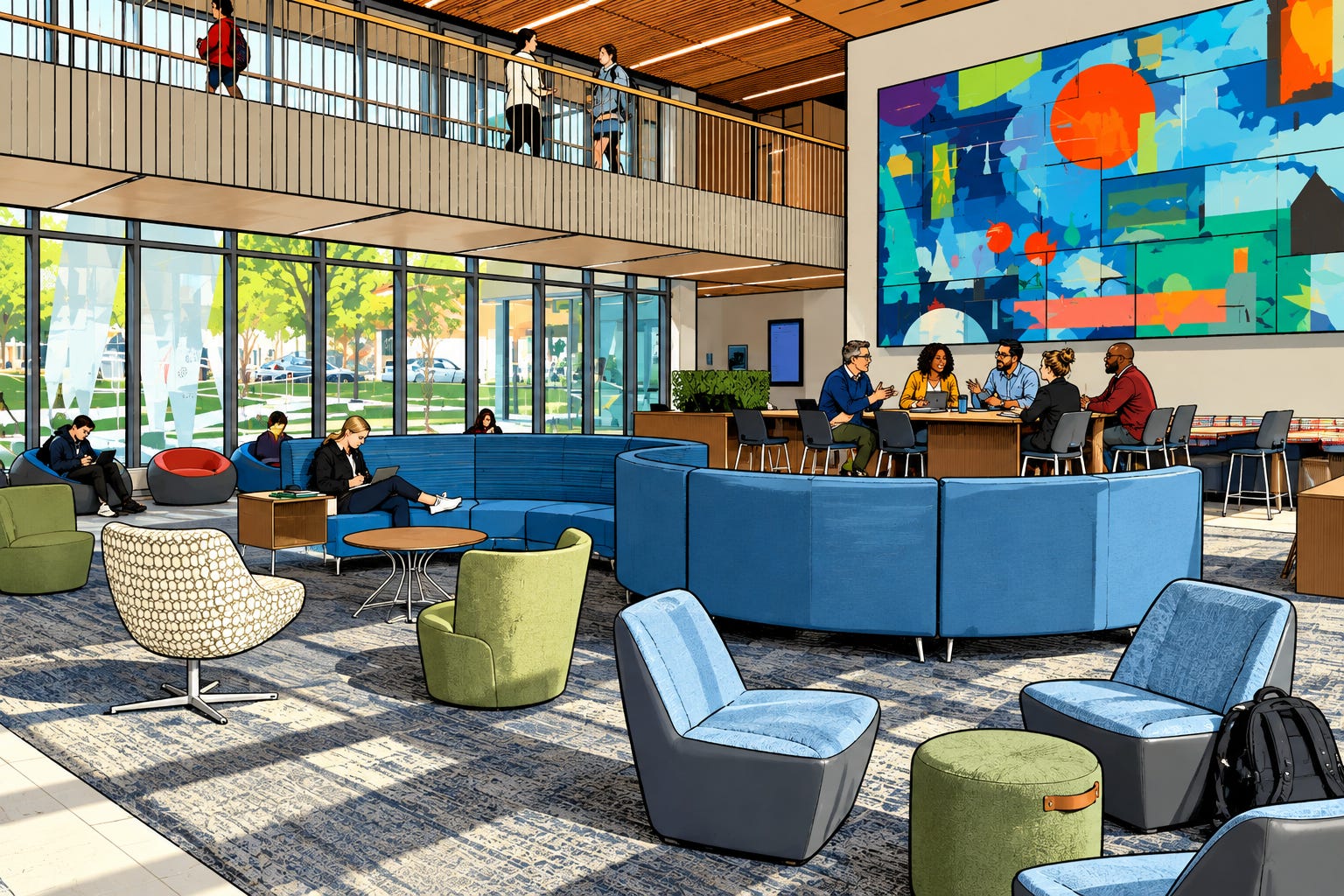
Nothing earth-shattering, but something else came to the surface: we all valued being in the same space, discussing this in the real 3D world. I believe physical presence helps ground us. It disconnects us from our devices and connects us to each other.
That connects back to the topics people raised. Silence from leadership, isolated action inside the bubble, and silence from everyone else are all problems of people not talking to each other. Ten people in a room is a small answer to that, but it is an answer. As an approach, the next step for our schools may be less about another platform and more about getting people in a room. I am wondering how many of our institutions are making space for that, and how many individuals are willing to spend their time and resources on that.


No comments:
Post a Comment