Every technology, every change has unintended consequences on the world. Impacts that in hindsight are obvious but are actually hard to predict. This week I want to think through how teachers of writing are grappling with the impact of student AI use on their teaching life, and why I think the burden should not rest on them alone.
Recently, an acquaintance (who may be reading these words) admitted that after many years of teaching language and writing to English learners in higher education, she decided to retire, much like Victoria Livingstone, partly because of the rise of AI. This rhymes with what I am hearing around me. People are not leaving the profession in droves, but they are frustrated and challenged. What I hear is exhaustion and sometimes dread from the conversations instructors have to have a few times a week with a student who very clearly used AI to produce an assignment.
AI has gotten very good at creating polished texts at a linguistic level far above what a novice writer produces. I am not saying it’s better. I am saying it is smoother and appears more scholarly. Instructors dread two potential outcomes. The first is the defensive “I did not use AI” and the self-righteous indignation that comes with it, emotionally taxing and very unhelpful for learning. The second is the admission of guilt, explaining the stressful situation [time constraints, last-minute debacle, fear of failing, feeling of inadequacy], some true, some augmented, but real. It is followed by apologizing, sometimes heartfelt, always unhelpful for learning.
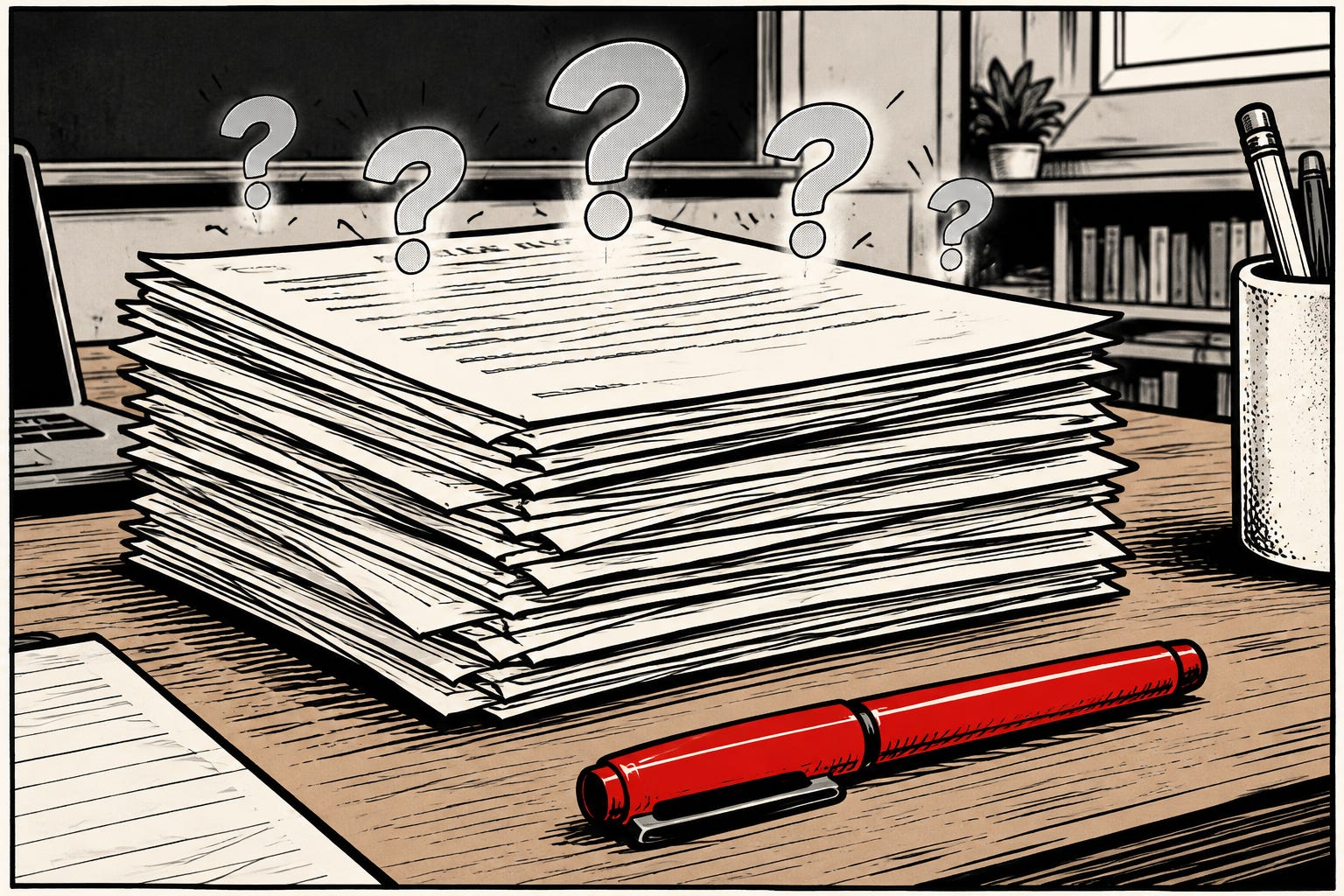
The refrain I hear is simple. This is not how I want to spend time with students. This is not what I signed up for. It is eating up my time, and if I fall for an AI assignment, I feel stupid. Not because I fell for it, but because I wasted my time giving feedback on a paper written by AI. Instructors hate viewing each successful student with a question mark. On the other hand, they know they cannot let it go. If instructors ignore the use of AI, students will soon tell each other, and the ones not using AI will be pushed to use it so they do not fall behind. If students do not feel valued for their hard-earned effort, they will not make an effort.
So do I foresee a language and writing teacher apocalypse coming? Perhaps. One option is to wait it out, and past innovations may be instructive here. In the last 20 years the rise of digital platforms and curricula (mainly K-12) pushed some teachers to retire or change professions. There was a dip for a while, and we came out of it with a new generation of teachers who take the platforms for granted.
A second option is that AI companies and institutions provide the kind of detection that reduces the need for policing and conversations. Each assignment would arrive with a message that evaluates the probability it is AI. The rise of Pangram and watermarking in the models helps that along. Detection will never be perfect, and false positives carry real costs, especially for English learners. Still, institutional detection moves the burden off the instructor and returns it to the level of concern we had before AI, because plagiarism and cheating were always part of the landscape.
In Abundance, Klein and Thompson argue that as a society we overemphasize the risks of action and underemphasize the costs of inaction. Waiting it out is inaction, and its cost is a generation of experienced instructors. I am calling on institutions to start acting and not leave it to overworked and underpaid instructors who are just trying to make it to next week with feedback that leads to better thinking and better writing. Their exhaustion is one of those unintended consequences, and it is no longer hard to predict.

