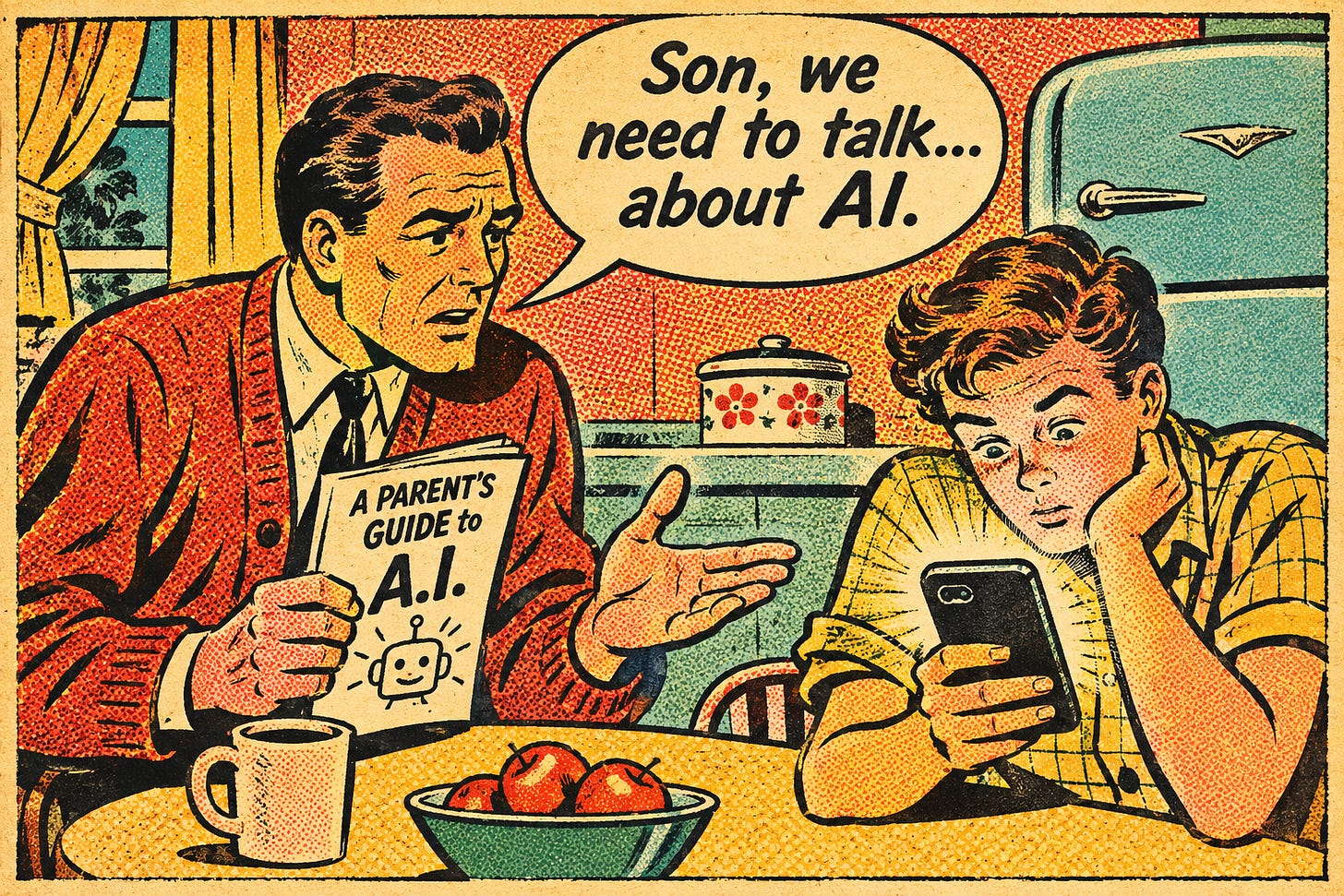
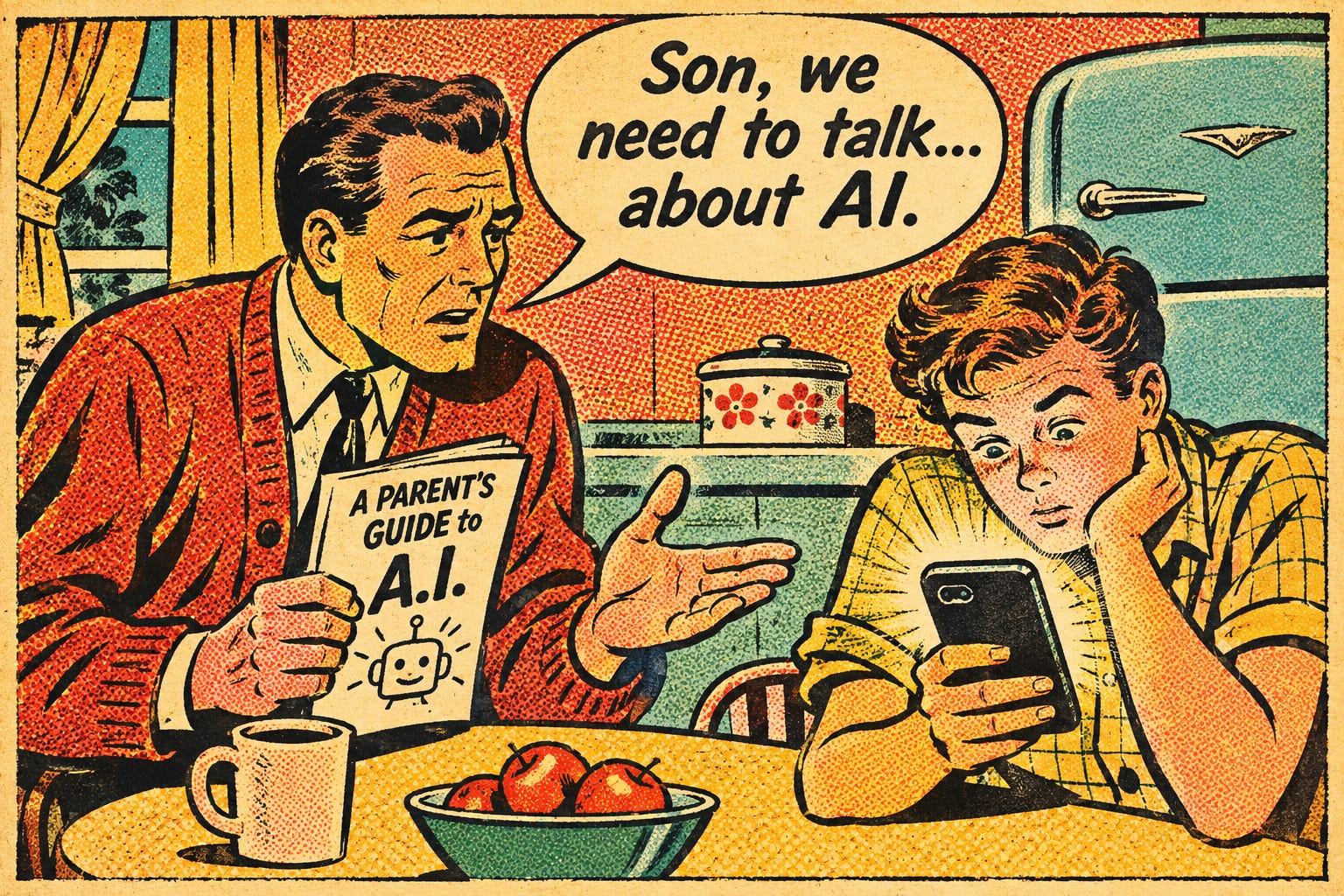
We can learn a lot about teaching AI from the way we approach sex education. The parallel is not perfect, but bear with me.
Both draw strong emotions and resistance
Sex education draws a lot of emotion and pushback. AI education does the same right now. Parents have very strong feelings (even if they are sometimes confusion) about AI and its role in their children’s lives, as we can see in the movements to ban screen time, or AI specifically, in schools that are sweeping the nation. These emotions also lead to students and adults feeling shame and discomfort. They do not want to talk about AI use with parents and teachers. Repeatedly in research they admit to much less AI than they actually use. Anecdotally instructors tell me that they have repeatedly found that students that are very vocally anti AI submit work that is clearly AI generated.
Students are already exposed
Our students are exposed to sex through the internet and popular culture in ways earlier generations were not. The availability of pornography and the unhealthy messaging on social networks change our relationship with sex education. In the past we could pretend that kids did not get the information, although they invariably got it from peers, rumors, and magazines. Now they get it on their phones and laptops, anywhere they have an internet connection. We have been trying to regulate it, which I fully support, but we have to admit that it has not been very successful. One way sex education in schools helps is by providing real information in a balanced way, so young people are equipped to respond thoughtfully and ethically to what they are exposed to, whether they want that exposure or not.
AI works the same way. It is out there. Students have access to it on their phones, on their computers, and through their friends. They are talking about it. They are using it often in naive ways. It comes down to exposure. Since students of all ages are now exposed to AI, schools have to teach them about the ethics, the uses, how to be careful, and how to use it judiciously. I still believe the community needs to define what judiciously means. Either way, students have to learn about AI.
The risks are real
Having sex without knowledge and without safety creates real problems for the people involved, not always and not immediately but risks abound. The same goes for AI. There is a real risk of sharing too much personal or highly confidential information. There is a danger in treating AI as a friend that may give very bad advice, and we all know the examples involving suicide and other ways people detach from society. We are aware that, ethically, other people might be harmed when you use AI, and that you may be harming yourself. This educational piece is critical. Whether we teach with AI is almost a separate question. We have to teach our students about sex, and we have to teach our students about AI.
Where the metaphor breaks
The one way sex and AI differ is that parents, families, and communities, for the most part, know a lot about sex, or at least think they do. The knowledge is out there, and the consequences are clear. Things are much less clear with AI. Parents are less equipped to talk with their kids about it and to hold clear opinions and guidelines, whether those are shared across the community or specific to a family. They simply have less to draw on.
As schools, as an educational system, we have to do two things:
1. We have to hold community discussions about how we want to educate our kids about AI. Again, this is not about having them use AI. That is a somewhat separate question, although the two overlap.
2. We have to make sure we equip our students to deal with AI, because that is the reality of their lives right now, and it will be the reality of their future lives at work and in school.
Our students are exposed to sex through the internet and popular culture in ways earlier generations were not. The availability of pornography and the unhealthy messaging on social networks change our relationship with sex education. In the past we could pretend that kids did not get the information, although they invariably got it from peers, rumors, and magazines. Now they get it on their phones and laptops, anywhere they have an internet connection. We have been trying to regulate it, which I fully support, but we have to admit that it has not been very successful. One way sex education in schools helps is by providing real information in a balanced way, so young people are equipped to respond thoughtfully and ethically to what they are exposed to, whether they want that exposure or not.
AI works the same way. It is out there. Students have access to it on their phones, on their computers, and through their friends. They are talking about it. They are using it often in naive ways. It comes down to exposure. Since students of all ages are now exposed to AI, schools have to teach them about the ethics, the uses, how to be careful, and how to use it judiciously. I still believe the community needs to define what judiciously means. Either way, students have to learn about AI.
The risks are real
Having sex without knowledge and without safety creates real problems for the people involved, not always and not immediately but risks abound. The same goes for AI. There is a real risk of sharing too much personal or highly confidential information. There is a danger in treating AI as a friend that may give very bad advice, and we all know the examples involving suicide and other ways people detach from society. We are aware that, ethically, other people might be harmed when you use AI, and that you may be harming yourself. This educational piece is critical. Whether we teach with AI is almost a separate question. We have to teach our students about sex, and we have to teach our students about AI.
Where the metaphor breaks
The one way sex and AI differ is that parents, families, and communities, for the most part, know a lot about sex, or at least think they do. The knowledge is out there, and the consequences are clear. Things are much less clear with AI. Parents are less equipped to talk with their kids about it and to hold clear opinions and guidelines, whether those are shared across the community or specific to a family. They simply have less to draw on.
As schools, as an educational system, we have to do two things:
1. We have to hold community discussions about how we want to educate our kids about AI. Again, this is not about having them use AI. That is a somewhat separate question, although the two overlap.
2. We have to make sure we equip our students to deal with AI, because that is the reality of their lives right now, and it will be the reality of their future lives at work and in school.


No comments:
Post a Comment