I recently sat on a grant panel. As on many panels, I was asked not to discuss the details of the decisions, a request I always respect. The proposals spanned a wide variety of fields, so there was plenty to learn and chew on. What struck me most was the robust use of AI.
Well, you’d say, we live in the age of AI. Everybody’s got ChatGPT (or pick your favorite model), and people mumble something about how it can be used because generative AI is sexy and new. The cynic would point out that we’re saturated with AI, both as an economic and a cultural phenomenon, and that if you want funding, you have to at least nod toward some magical use of AI that will completely transform your field. The cynic would add that in most cases, the AI is described vaguely and hand-wavily. And they wouldn’t be entirely wrong.
But in many of these applications, I saw something else entirely. Most of them actually included well-thought-out machine learning, not generative AI. They used small models, built from scratch for a specific purpose, as opposed to large language models. In a way, these proposals were “unsexy”: they didn’t reach for the new models at all. They offered innovative solutions using the old ones.
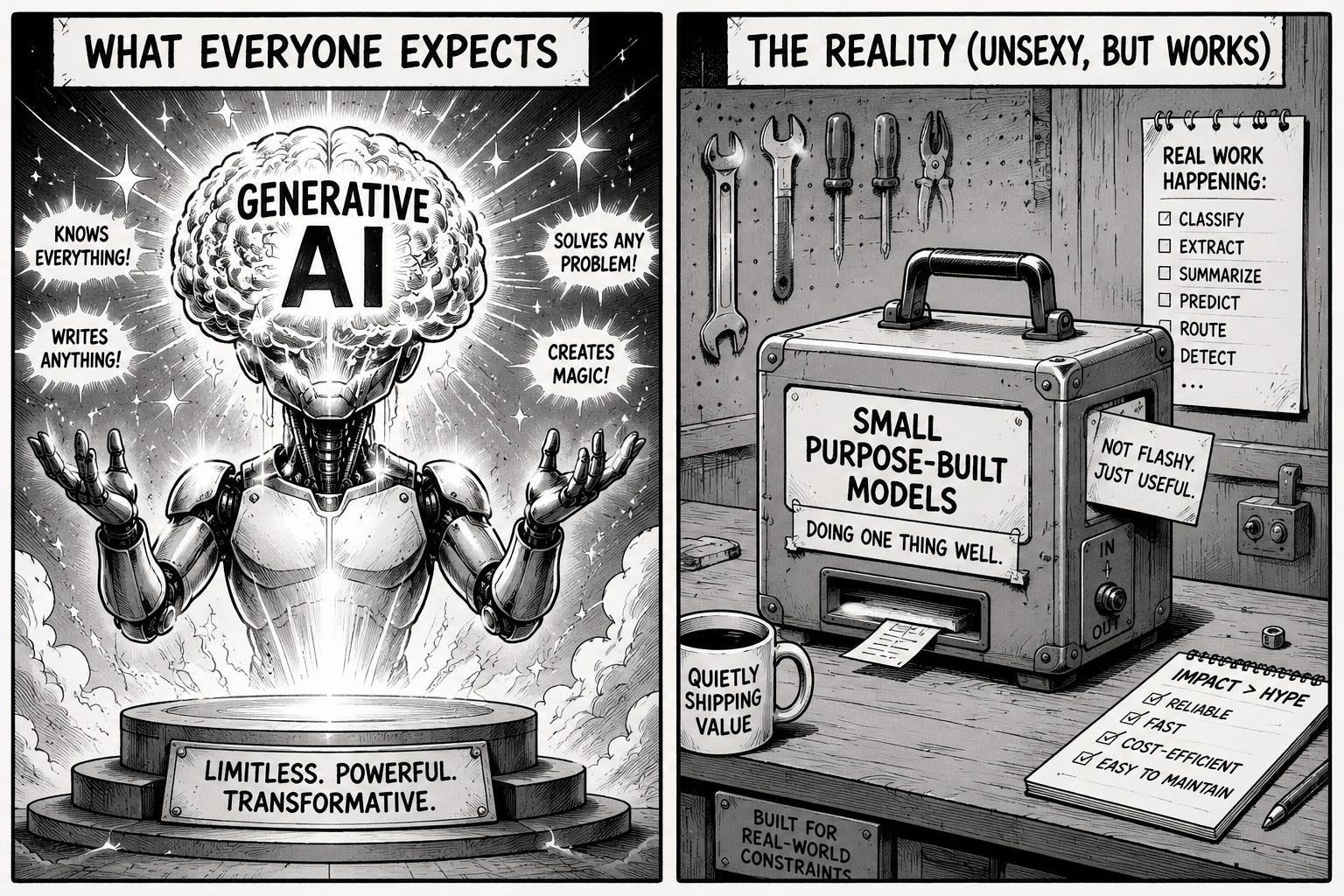
The insight took a few days to land. AI was everywhere, but not in the cynical way I’d expected. Here’s how I read it: the cultural significance of generative AI, and the sheer accessibility of AI, has gotten researchers in every domain thinking, “Hey, maybe this AI thing can help me solve this really hard problem.” (Sorry, I can’t reveal much from the panel, so no details.) It’s fairly clear to me that generative AI has started a conversation inside research that will produce exciting new solutions to some of our most intractable problems.
The next challenge, oddly, will be having enough compute, coders, and AI experts to bring these projects to fruition. I saw this at one of our research gatherings earlier this year: everyone is looking for an AI research partner, while our AI scientists are flooded with collaboration requests. I think we could triple the number of people doing that work and still have demand to spare.
So where does that leave us? I believe research universities should invest in compute and AI know-how as a shared service that can support many research efforts at once. Some have already gone this direction. I hope more, including UNL, will follow.